


How to Choose Birthstone Charms: Style and Stack Them
Ask most people how to choose birthstone charms and they start with the month. We start with the size. Our line comes in three kinds: a 5mm stone in a slim gold bezel, a 10mm bead set with stones all the way around, and a 3mm charm that hangs from a huggie earring. They wear differently, so the right birthstone charms for you depend on where you want the color to sit.
From across a table, a bezel charm is a point of color. A bead is an object. An earring charm is the one someone notices when you tuck your hair back.
The three kinds of birthstone charm
The bezel charm
The bezel charm is 14k yellow gold: a bezel, a jump ring, and a 5mm stone in the center. It comes in all twelve months, with turquoise as a second choice for December. It's the quietest of the three, and the easiest first charm because it asks nothing of the chain it hangs from.
The birthstone bead
The bead is 14k solid yellow gold, 10mm, and set with the month's stone all the way around. It goes on a bracelet or a necklace. A bezel charm gives you a point of color; a bead gives you a ring of it, and more gold. Choose it when you want one charm to hold its own. One bead per person is the simplest way to wear a family. All twelve are in our birthstone beads collection. A few are made to order, so if you're shopping for a date, ask us which months are ready to ship.
The earring charm
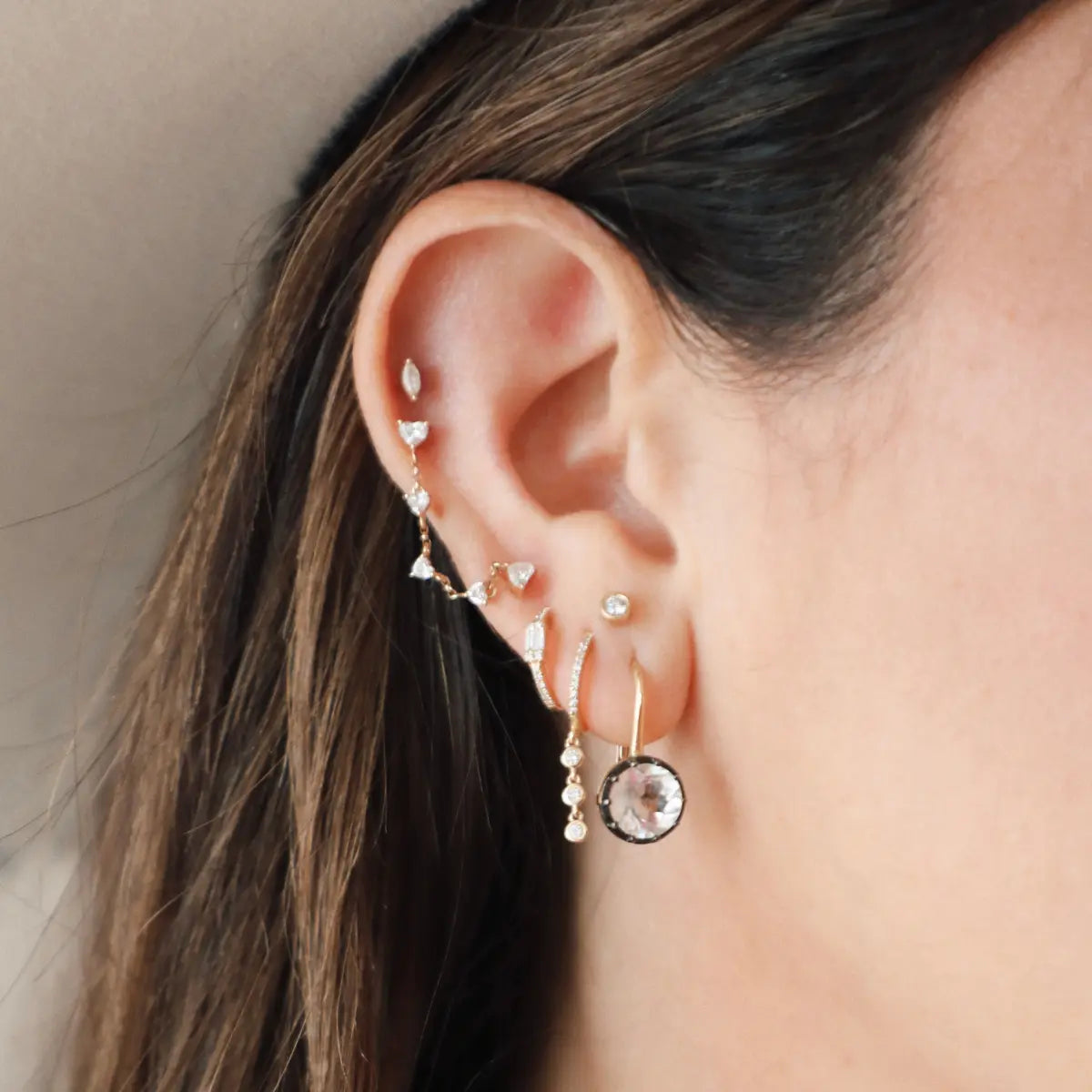
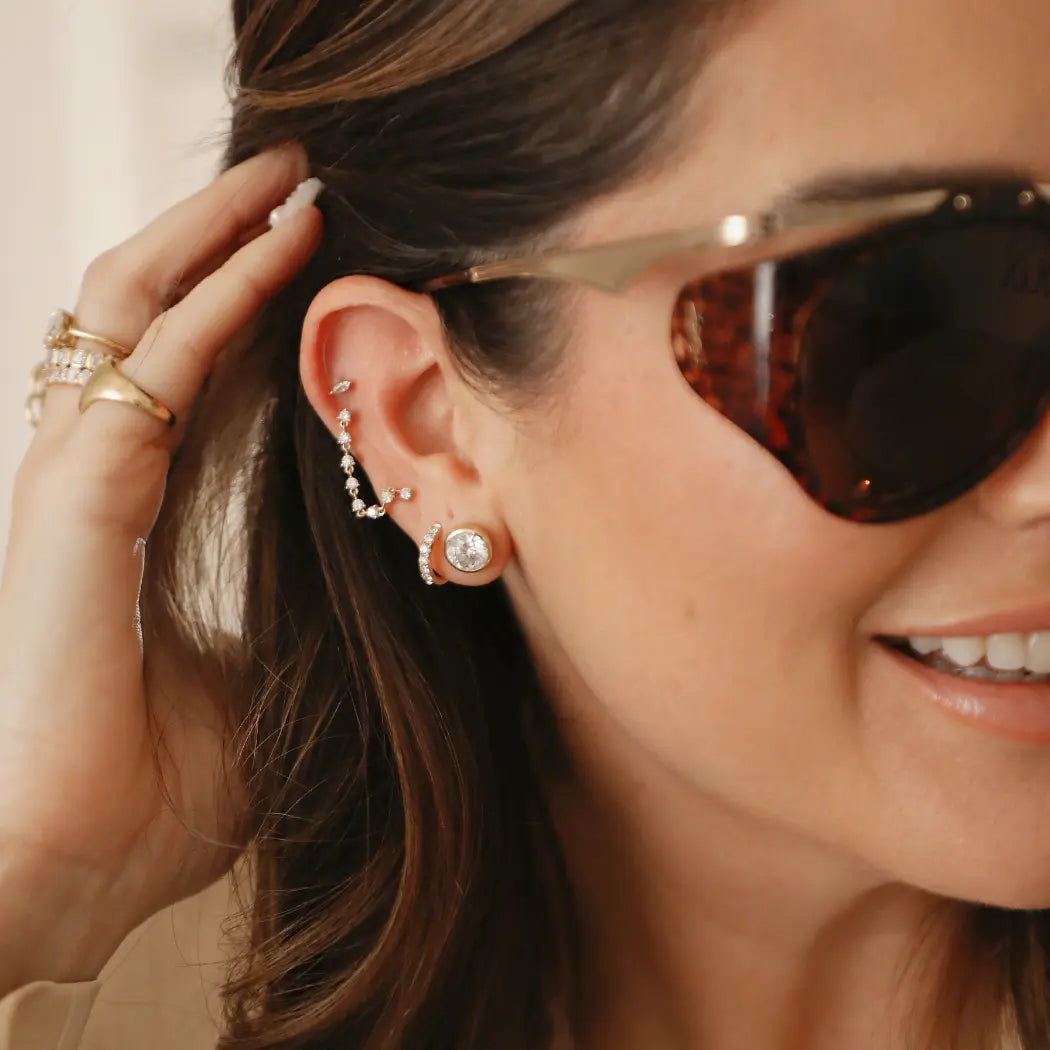
The earring charm is 14k yellow gold with a 3mm stone and a 4mm loop that connects it to a huggie. It fits our 10mm and 11mm diamond huggies, and it's sold as a single. The gemstones are natural; the June charm is a cultured pearl.
How to choose birthstone charms by stone
Start with whose month it is, then look at what the month offers. On the American Gem Society's list, six months have more than one official stone: March, June, August, October, November and December. That's why two people born in the same month can end up with different charms, and both can be right.
October shows it in our own line. The bezel charm and the bead are pink tourmaline, the earring charm is opal, and both stones are on the official list. June splits the same way: cultured pearl for the bezel and earring charms, moonstone for the bead.
A few of our choices sit outside the official list, and we'd rather say so. Our May bead is green tsavorite, a green garnet that GIA describes as rarer than red garnet. The official May stone is emerald, and that's what our May bezel and earring charms carry. Our December bead and earring charm are blue topaz, which isn't on the official December list of tanzanite, turquoise and zircon. The December bezel charm comes in blue topaz or turquoise, and turquoise is official.
Choose the stone the person will want to wear. If they care about the official list, check the stone named on each product page before you add a charm to your cart. The full list by month is in our guide to the 12 birthstones by month.
Which stones suit everyday wear
A charm on a chain or in an ear has an easier life than a ring that does the dishes. Still, the stones in this line vary a lot in hardness. GIA lists sapphire at 9 on the Mohs scale, moonstone at 6.0 to 6.5, turquoise at 5 to 6, and opal at 5 to 6.5. A cultured pearl sits at 2.5 to 3.0.
None of that is a reason to skip a month. Match where the charm sits to the stone. If it will ride on a wrist all day, lean toward the harder stones. If it will sit on a necklace or hang from an ear, a cultured pearl or an opal is a reasonable choice.
Our care guide asks you to take jewelry off for strenuous activities like working out, weight lifting, surfing and skiing. Keep each piece in its own place so nothing scratches or dents. And have huggies checked now and then, because daily wear can loosen them at the hinge. If that happens, bring them to the atelier and we'll tighten them.
How to wear birthstone charms
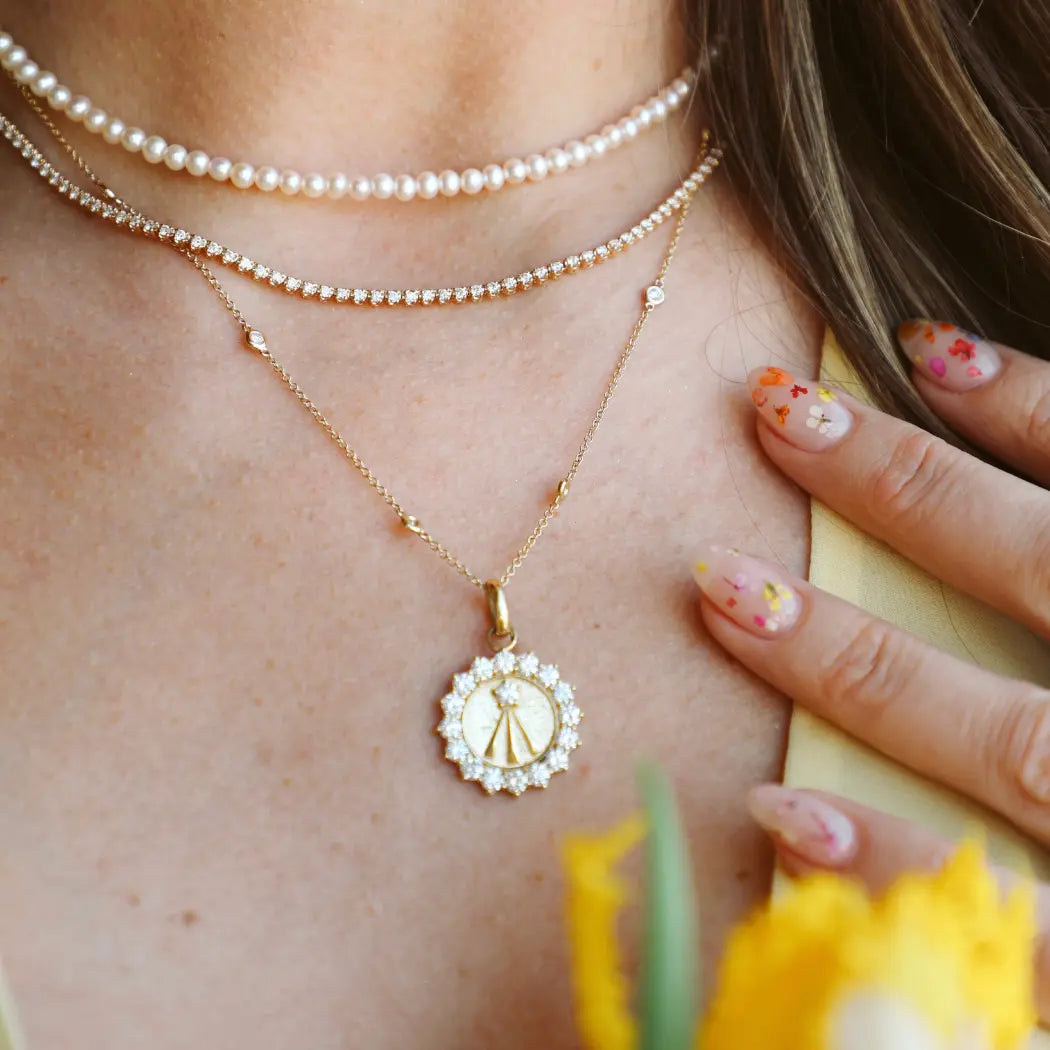
On a necklace, a bezel charm hangs from its jump ring and collects on a chain, and a bead can go on a necklace too. On a wrist or ankle, we attach bezel charms to permanent bracelets or anklets in the atelier, and a bead can go on a bracelet. On an ear, the earring charm hangs from a huggie.
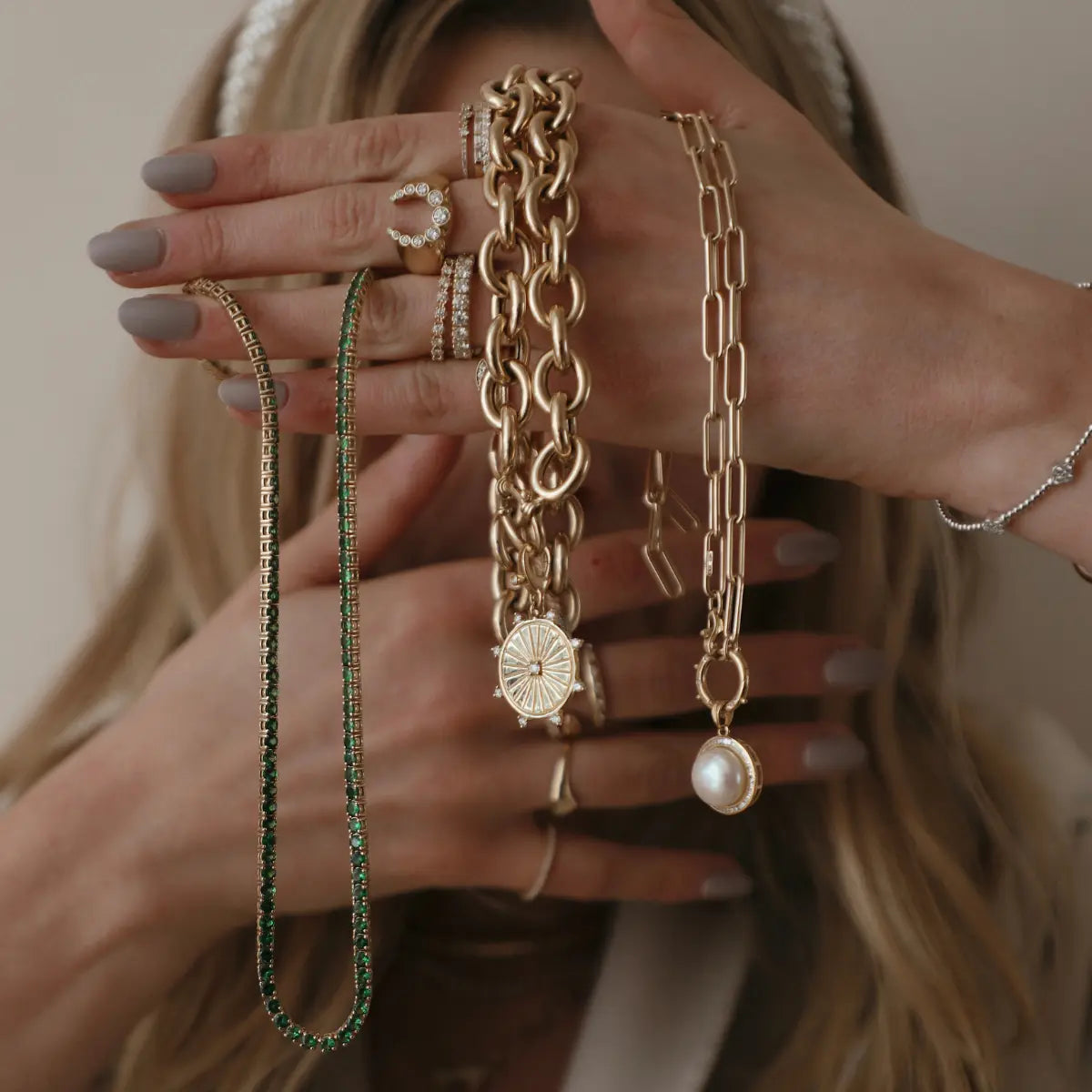
Or wear all three at once: a bead on a necklace, a bezel charm on a permanent bracelet, a charm on each huggie. It reads as a collection rather than a matching set. Let one piece lead and keep the others quiet. If you're building a whole necklace from several kinds of charms, our guide to building a charm necklace that tells your story covers that.
How to stack and mix birthstone charms
Count the people first. Start with the ones you'd never leave out and add the rest as the family changes: a new baby, a wedding, a grandchild. There's no set number. The one rule we'd defend is size. A bead is 10mm and a bezel stone is 5mm, so a bead needs fewer neighbors to read as a stack. Two or three beads make a cluster. It takes more bezel charms to get the same effect.
Then look at who sits next to whom. Stones close in color blur together; a pink tourmaline beside a ruby starts to look like one pink-red stone. A citrine bead beside an amethyst bead keeps both colors clear. The white moonstone bead is pale enough to work as a rest between two strong colors.
On huggies it's simpler, because earring charms are sold as singles. Put the same month in both ears for a pair, or two different people, one in each. Or hang one charm and leave the other huggie bare, which looks deliberate. The bezel charm, the bead and the earring charm are all 14k yellow gold, so the metal stays constant and the stones carry the color.
Choosing for someone else's wrist? Our guides to the family birthstone bracelet and the birthstone bracelet for mom go further on that. If the charm is a present, our birthstone gift ideas show rings, beads and charms side by side.
Birthstone charm questions
How do I choose a birthstone charm?
Start with where you'll wear it. The bezel charm has a 5mm stone on a jump ring, the bead is 10mm and goes on a bracelet or a necklace, and the earring charm has a 3mm stone and fits our 10mm and 11mm diamond huggies. Then choose the stone for the person's month.
What if a month has more than one birthstone?
Six months have more than one official stone on the American Gem Society's list: March, June, August, October, November and December. Pick the one the person likes best. In our October line, the bezel charm and bead are pink tourmaline and the earring charm is opal, and both are official.
How do you wear birthstone charms?
Bezel charms collect on a necklace chain, or we attach them to a permanent bracelet or anklet in the atelier. Beads go on a bracelet or a necklace. Earring charms hang from our 10mm and 11mm diamond huggies.
How many birthstone charms should you stack?
There's no set number. Start with the people you'd never leave out and add more as the family grows. A bead is 10mm and a bezel stone is 5mm, so two or three beads make a cluster, while it takes more bezel charms to get the same effect. Earring charms are sold as singles, so each ear can carry its own month.
Can you wear birthstone charms every day?
Yes, if you match the stone to where it sits. Harder stones such as sapphire (9 on the Mohs scale) suit a wrist better than a cultured pearl (2.5 to 3.0) or opal (5 to 6.5), which do better on a necklace or in an ear. Take jewelry off for strenuous activities like working out or surfing, and have huggies checked now and then, since daily wear can loosen the hinge.
Choose the size for where it will sit and the stone for the person it stands for. The rest is adding people as they arrive.
Mama Bijoux is a fine jewelry brand designed by Katie Miller, with an atelier in Newport Beach, California.
Discover more at Mama Bijoux
Leave a comment
This site is protected by hCaptcha and the hCaptcha Privacy Policy and Terms of Service apply.