


The 12 Birthstones by Month — Fine Jewelry Guide
The Tradition
A Brief History of Birthstones
Birthstones trace back centuries and evolved from ancient traditions connecting gemstones to the twelve tribes of Israel, zodiac signs, and eventually the twelve months of the year.
The modern birthstone list was standardized in 1912 and remains one of the most enduring forms of personalized jewelry today.
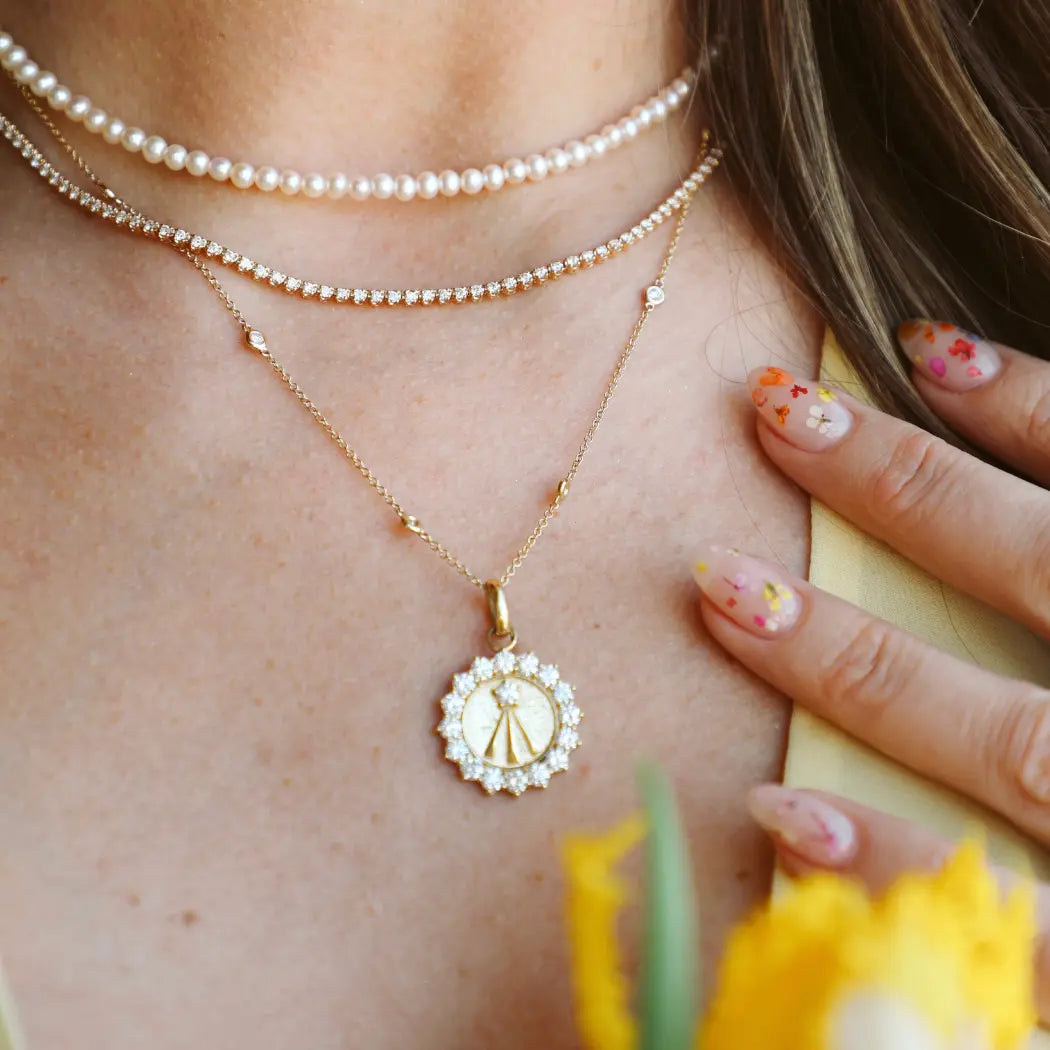
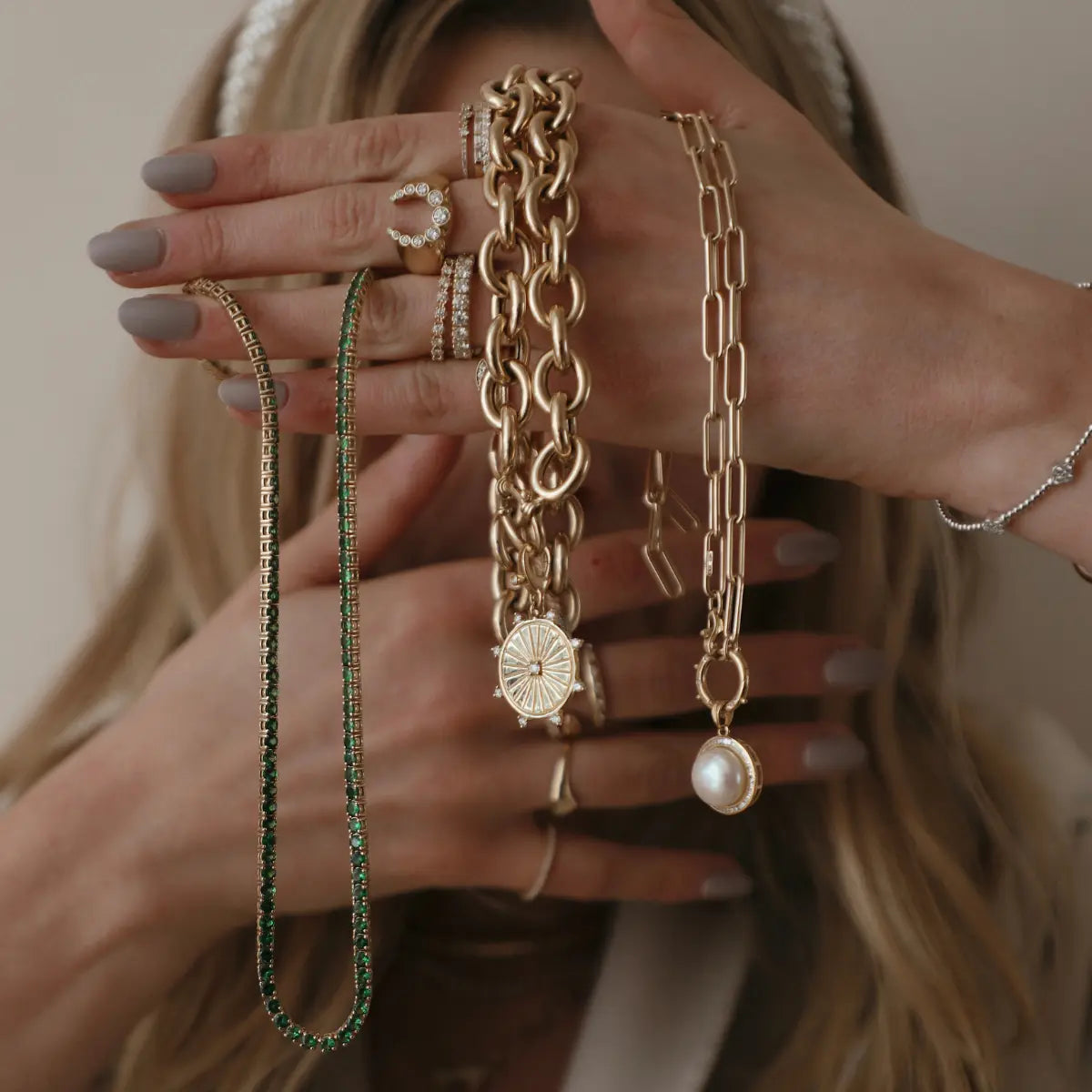
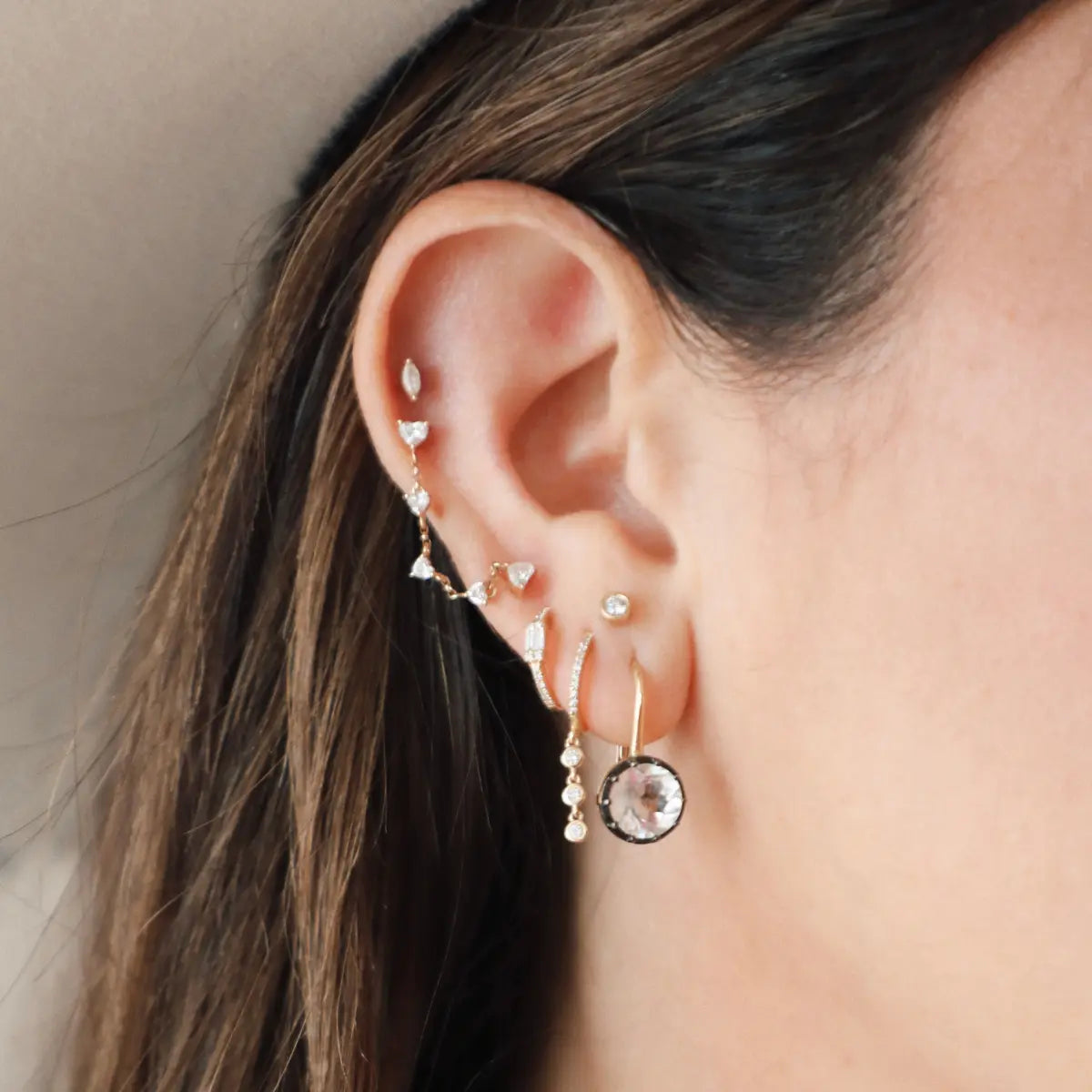
The best birthstone jewelry feels personal first and symbolic second.
The 12 Birthstones
Birthstones by Month
January — Garnet
Deep red garnet symbolizes protection and strength. Especially striking in yellow gold.
February — Amethyst
Purple amethyst symbolizes calm and clarity. At 7 on the Mohs scale, it's hard enough for a ring worn every day, and it suits both yellow and rose gold.
March — Aquamarine
Aquamarine has been associated with safe travel at sea since Roman fishermen carried it for protection, and it's known for its excellent clarity. Its pale blue looks coolest in white gold. Our aquamarine stacking pinky ring takes the warmer route, alternating natural aquamarines with diamond accents in 14k yellow gold. March's other official birthstone is bloodstone, a dark green stone flecked with red.
April — Diamond
The hardest natural stone and the most versatile birthstone for everyday fine jewelry. Diamond has been associated with enduring love since its first recorded use in an engagement ring, in the 15th century.
May — Emerald
Rich green emeralds symbolize renewal and prosperity. Most have inclusions, which dealers call a jardin, or garden. For daily wear, our emerald stacking pinky ring pairs natural emeralds with diamond accents in 14k yellow gold.
June — Pearl
Pearls glow rather than sparkle, and they're traditionally associated with wisdom and calm. At 2.5 to 3 on the Mohs scale, they scratch easily, so they suit earrings and necklaces better than a ring worn every day. June has two other official birthstones. Alexandrite shifts from blue-green in daylight to reddish purple under incandescent light, and moonstone has a soft sheen that seems to float across its surface.
July — Ruby
One of the most valuable gemstones in the world. It's red corundum, 9 on the Mohs scale, and its color comes from chromium. Ruby is traditionally associated with vitality and passion.
August — Peridot
Fresh yellow green tones glow in warm yellow gold settings. Long called the gem of the sun, peridot is associated with light and warmth. Spinel and sardonyx are August's other official birthstones: spinel often comes in red, pink, or blue, and sardonyx in layers of reddish brown and white.
September — Sapphire
Blue sapphire is among the most wearable and versatile colored gemstones, and it has long been associated with wisdom and loyalty. Our September sapphire birthstone bead sets natural sapphire all the way around a 10mm round bead in 14k yellow gold.
October — Opal
Known for its unique internal play of color and soft ethereal appearance. In the Middle Ages, opal was thought to bring its wearer luck. Tourmaline is October's other official birthstone, and it comes in nearly every color, pink included.
November — Topaz
Topaz comes in many colors, but for most of history all topaz was thought to be yellow, and golden yellow is still November's traditional color. It's hard, 8 on the Mohs scale, but a sharp knock can split it along its cleavage, a built-in plane of weakness. Topaz is traditionally associated with wisdom and long life. Citrine is November's other birthstone. Our citrine stacking pinky ring alternates natural round citrines with diamond accents in 14k yellow gold. The Citrine Beaded Necklace is hand-strung with natural faceted citrine in warm golden yellow tones.
December — Tanzanite & Turquoise
December has three official birthstones. Tanzanite, a violet blue stone, is mined commercially in only one place, the Merelani Hills of northern Tanzania. In ancient Egypt, turquoise was called mefkat, meaning joy and delight. Zircon, the third, comes in colors from red and yellow to green and blue.
Buying Considerations
How to Choose a Birthstone for Fine Jewelry
Consider durability first
Daily wear rings generally perform best with stones rated 7 or higher on the Mohs scale.
Match the metal intentionally
Warm stones tend to glow in yellow gold while cooler stones often shine in white gold.
Think beyond a single stone
The most meaningful birthstone jewelry often incorporates multiple family birth months together. When those months become charms, our guide shows how to stack birthstone charms so each one stays visible.
Frequently Asked Questions
What are the 12 birthstones by month?
January: garnet. February: amethyst. March: aquamarine or bloodstone. April: diamond. May: emerald. June: pearl, alexandrite, or moonstone. July: ruby. August: peridot, spinel, or sardonyx. September: sapphire. October: opal or tourmaline. November: topaz or citrine. December: tanzanite, turquoise, or zircon.
What is the best metal for birthstone jewelry?
Solid 14k and 18k gold are the best options for fine birthstone jewelry because they maintain their appearance over time.
Can you combine multiple birthstones in one piece?
Yes. Multiple birthstones are commonly incorporated into stacking rings, pendants, and mother’s jewelry.
Explore birthstone jewelry by Mama Bijoux.
Mama Bijoux creates personalized birthstone jewelry in 14k and 18k gold designed to become future heirlooms.
Explore Birthstone Jewelry
Leave a comment
This site is protected by hCaptcha and the hCaptcha Privacy Policy and Terms of Service apply.