


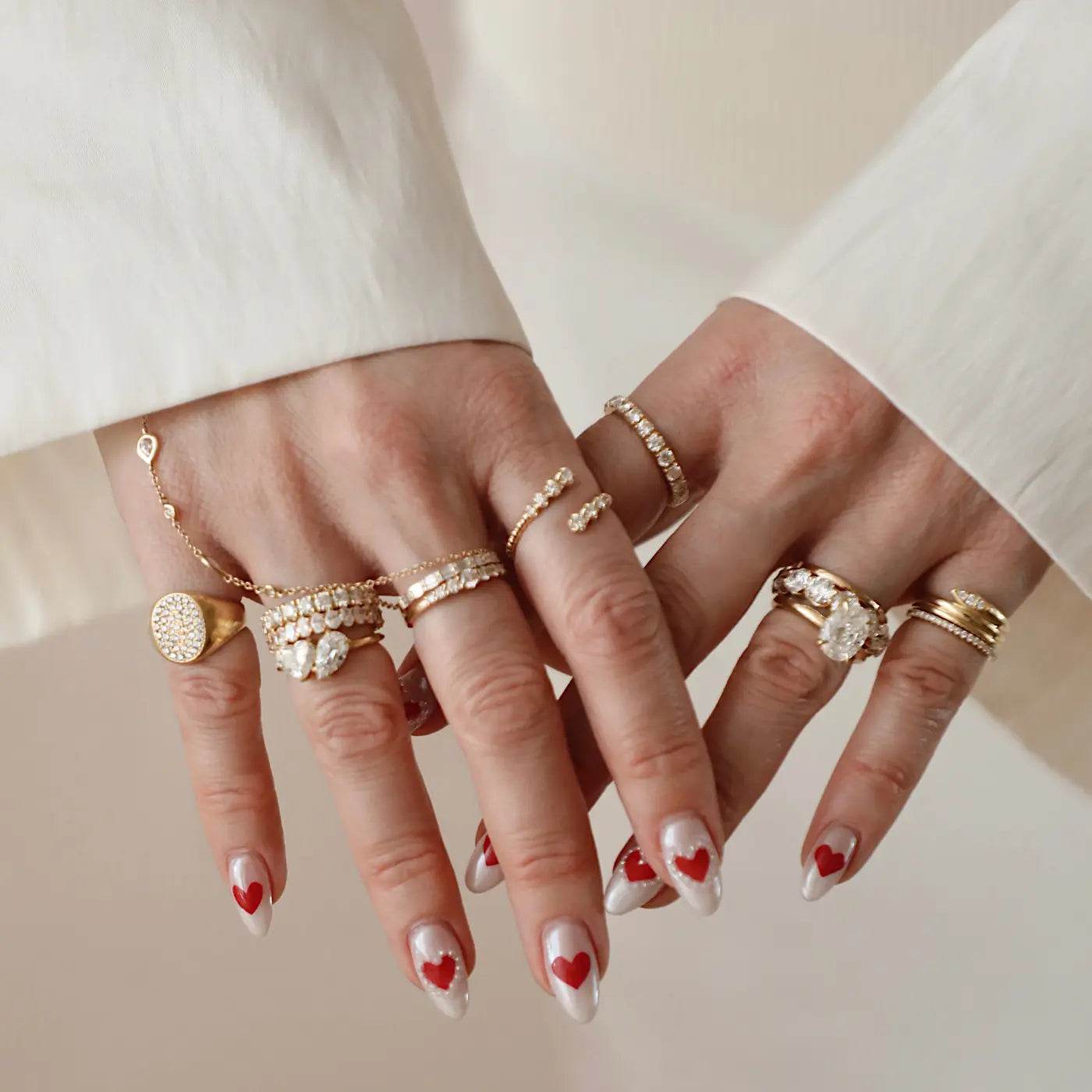

Article: Bezel vs Prong Setting: How to Choose


Bezel vs Prong Setting: How to Choose
A prong setting holds a stone with small metal claws and lets in the most light. A bezel setting wraps the stone's edge in a thin rim of metal and helps guard it against chips and snags. The choice is sparkle against protection, and it depends on what the piece will do all day.
The setting facts below come from the Gemological Institute of America's Complete Guide to Engagement Ring Settings. The piece details come from our own product pages.
How a prong setting works
GIA describes prongs as "narrow strips of metal that extend upward from the base of the setting" and curl over the edges of the stone. Most of the diamond stays open to the air, so a prong setting lets in the maximum amount of light.
GIA notes that most round brilliant diamond rings use four or six prongs. Fewer prongs expose more of the stone. More prongs add security. Four prongs may make a round stone look slightly squarer, while six emphasize the round shape.
The cost is a little attention. The raised edges can sometimes catch on fabric, and GIA says prongs should be checked occasionally to make sure they remain secure. Worn tips can be re-tipped.
How a bezel setting works
A bezel is, in GIA's words, "a thin rim of metal that surrounds the stone's edge and holds it firmly in place." A full bezel encircles the stone. A partial bezel leaves sections of it exposed.
GIA credits a bezel with excellent resistance to chips and everyday wear. It lets in slightly less light than prongs, and the smooth edges are less likely to catch on clothing or gloves. GIA says it suits people who work with their hands or have an active lifestyle. Our care guide still asks you to take jewelry off for workouts and other strenuous activity.
Bezel vs prong, side by side
- Light: prongs let in the most. A bezel lets in slightly less.
- Snagging: prong edges are raised and can catch on fabric. A bezel's smooth rim is less likely to catch on clothing or gloves.
- Protection: a bezel's rim guards the stone's edge. Prongs leave more of the stone open.
- Upkeep: prongs should be checked regularly, and worn tips can be re-tipped.
None of this adds up to a verdict. A stud on an earlobe and a bangle that meets a desk all day ask different things of a setting.
How to choose by how you live
Start with what the piece does between morning and night. If you type, carry kids or reach into a bag all day, the points GIA makes about snagging and chips matter more. If you wear it for dinners and want the stone to catch every bit of light, the open design of a prong setting is the draw.
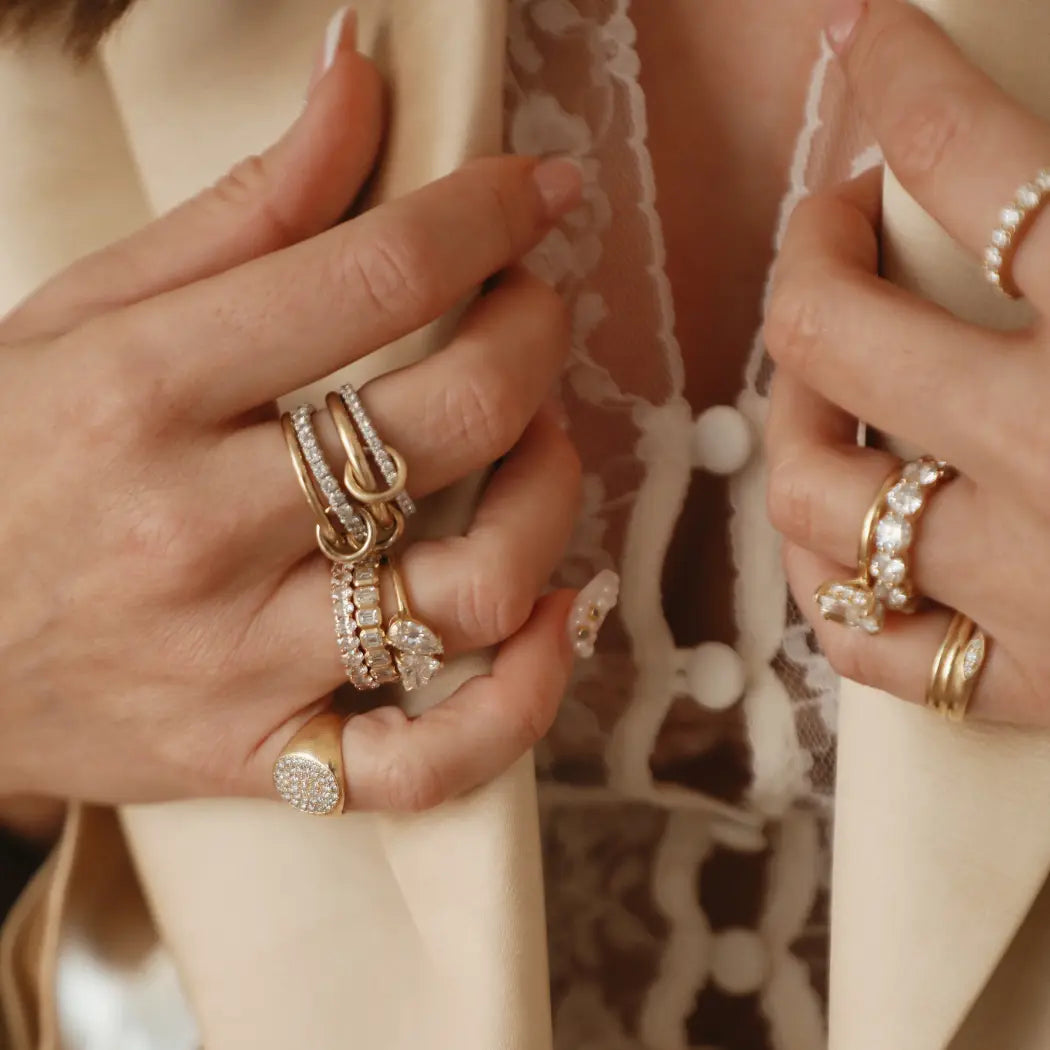
You can also stop choosing. Nothing says a wrist can't hold a prong-set bangle next to a bezel-set one.
Pieces to see in each setting
Prong
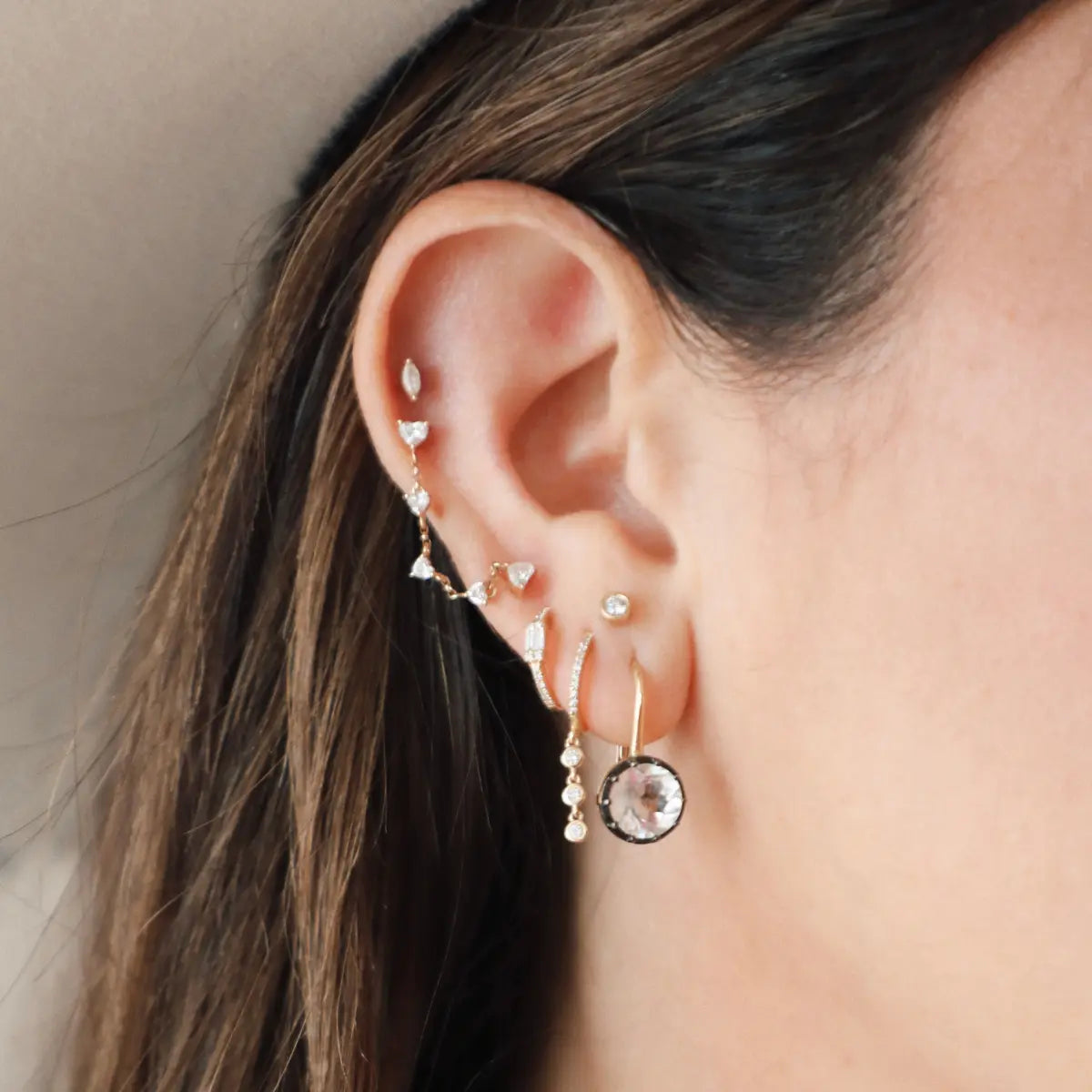
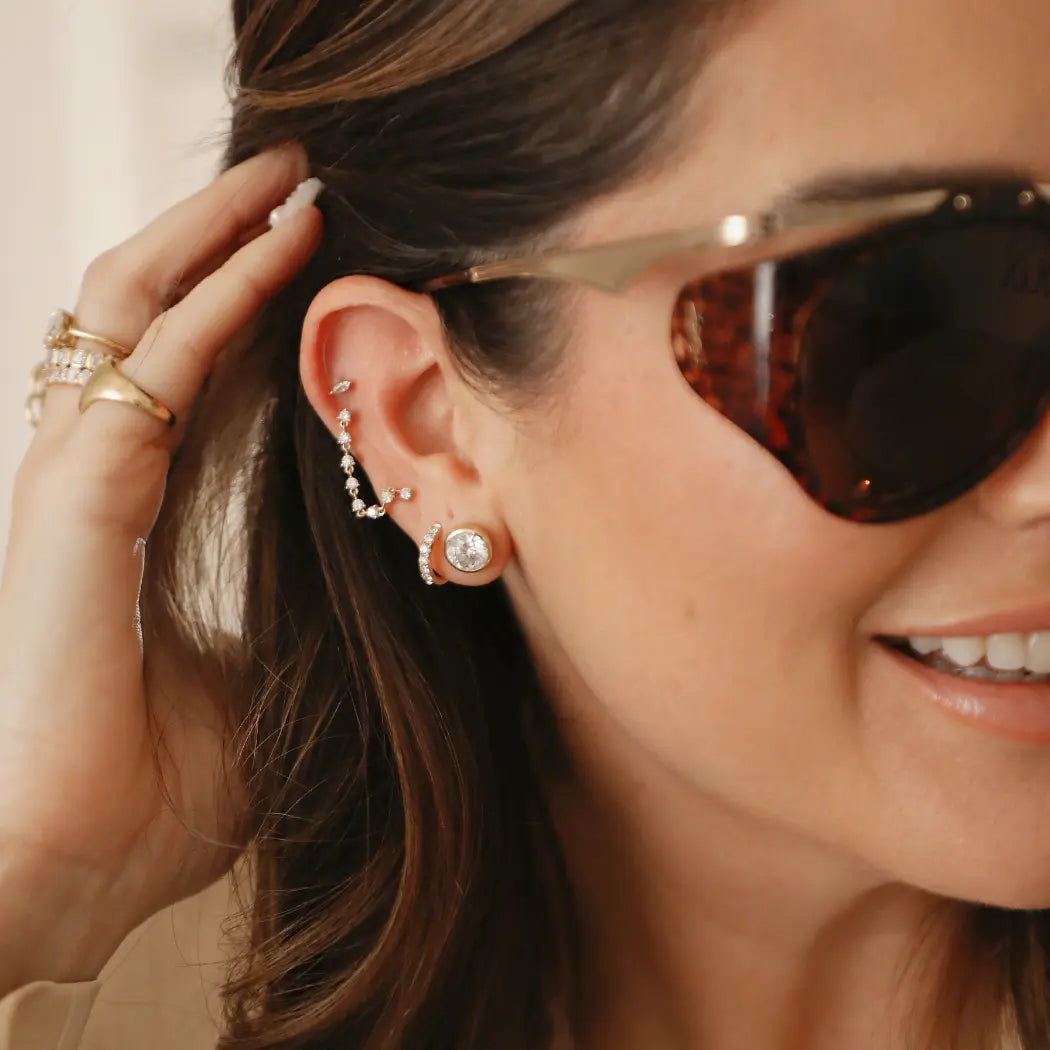
- Six Prong Diamond Stud Earrings: 14k yellow gold, .10 total carat weight of round brilliant-cut natural white diamonds, a post with a butterfly backing. Sold as a pair or a single.
- Classic Four Prong Diamond Flexible Tennis Bangle: 14k yellow gold (white or rose gold on request), round natural diamonds in F/G color and VS-SI1 clarity, a push/release safety closure.
Bezel
- Double Bezel Heart Charm: 14k solid yellow gold, a .24 total carat weight heart-shaped natural white diamond, an oversized round jump ring for a range of chain thicknesses.
- Mini Bezel Diamond Cross Charm: 14k yellow gold, .20 total carat weight of white round natural brilliant diamonds.
- Bezeled Sliding Diamond Flexible Bangle: 14k solid yellow gold, two bezel-set round diamonds inside a pavé diamond oval station, .36 total carat weight of white round natural brilliant diamonds in all, a push safety clasp.
Frequently asked questions
Is a bezel or a prong setting better for everyday wear?
Neither is better in every case. GIA says a bezel offers excellent resistance to chips and everyday wear and suits an active lifestyle, though we still suggest taking any piece off for workouts. A prong setting gives up some of that protection in return for more light.
Does a bezel setting hide the diamond?
Not hide, but it frames. A full bezel encircles the stone and lets in slightly less light than prongs do. A partial bezel leaves sections of the stone exposed.
How many prongs should a diamond have?
GIA notes that most round brilliant diamond rings use four or six. Fewer prongs show more of the stone, and more prongs add security.
Do prongs wear out?
They can. Have them checked regularly, and if a prong ever worries you, bring the piece in to be checked right away. Worn tips can be re-tipped.
Can I wear bezel and prong pieces together?
Yes. The setting changes how a stone looks and wears, not whether two pieces go together.
Leave a comment
This site is protected by hCaptcha and the hCaptcha Privacy Policy and Terms of Service apply.