


Why You Should Only Get Pierced with Solid 14k Gold
Why You Should Only Get Pierced with
Solid 14k Gold
Most walk in piercing counters use gold plated or gold filled starter posts, sometimes surgical steel, because they are inexpensive and meant to be swapped out later once the piercing heals. The problem is that a lot of healing happens in those first weeks, and plated metal is not solid all the way through. Underneath the thin gold layer is almost always a base metal, often one that contains nickel, and that layer wears down with every twist, every shower, every day the post sits against broken skin.
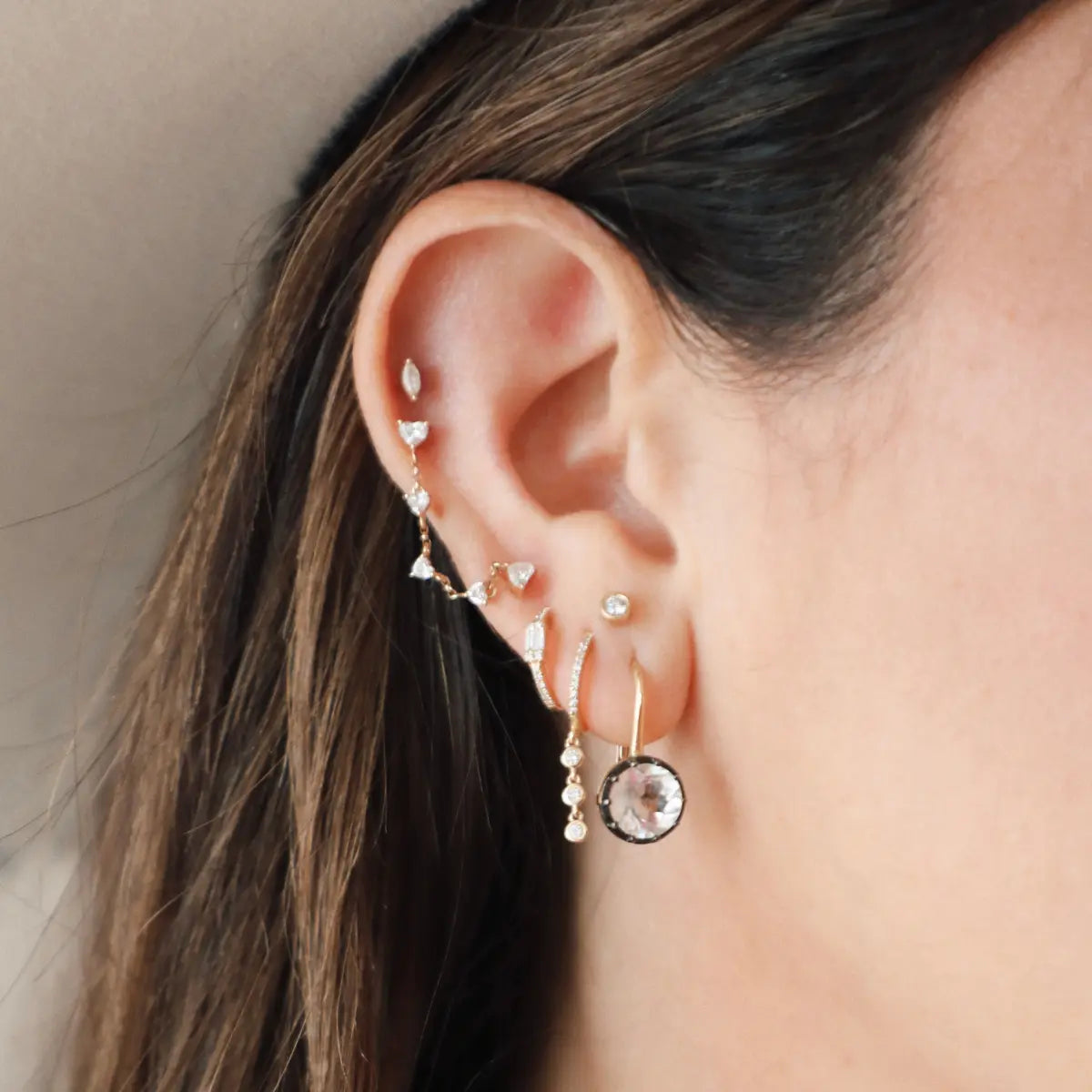
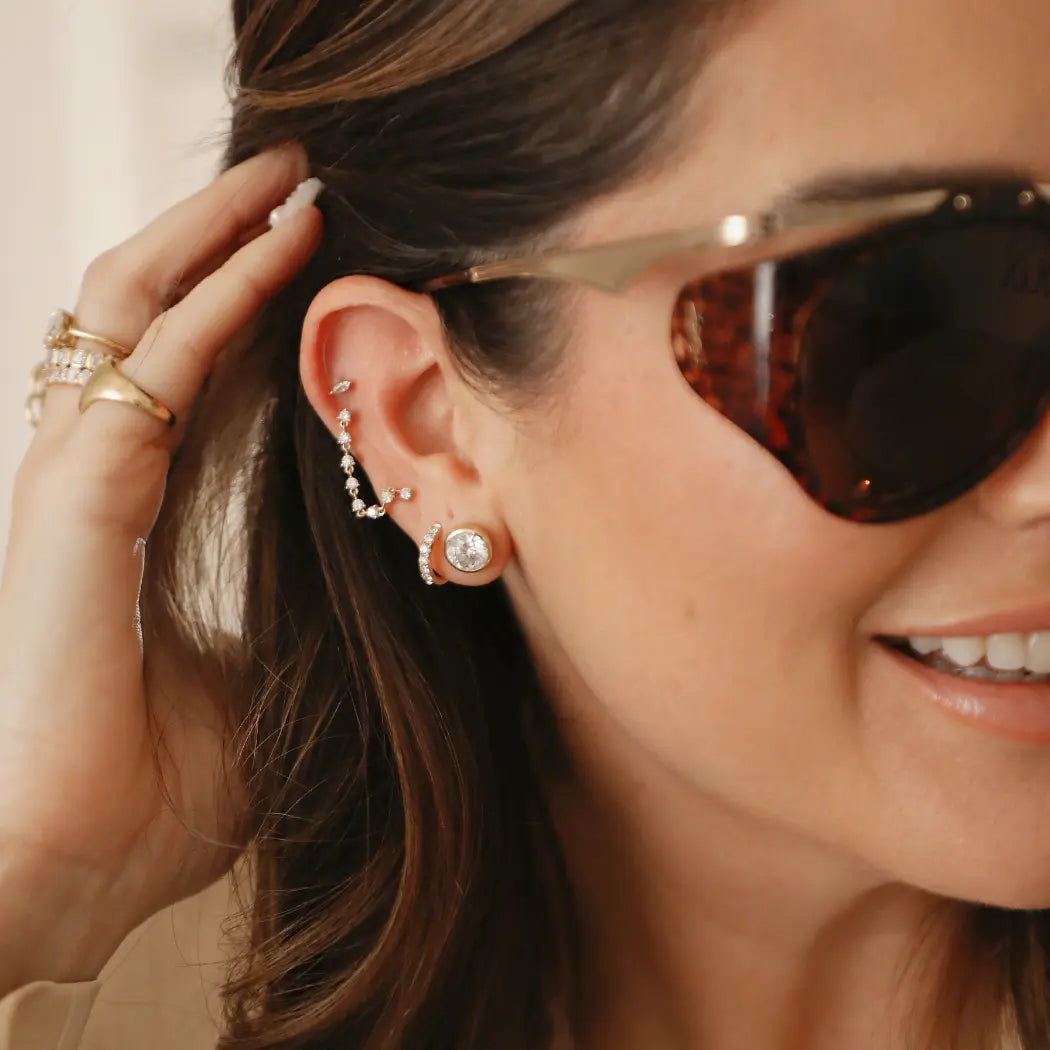
At Mama Bijoux, every piercing is done with solid 14k gold, the same studs you pick out and take home that day. Nothing plated, nothing filled, nothing you have to remember to swap later.
What Actually Touches the Wound
A new piercing is not just jewelry sitting in an earlobe. It is a wound channel, and whatever metal fills that channel is in constant contact with broken skin for the entire healing window, which can run anywhere from a few weeks for a lobe to several months for cartilage. Solid 14k gold is a stable alloy all the way through, so what touches the wound on day one is the same metal touching it on day ninety.
Plated and gold filled posts cannot promise that. The coating is thin by definition, and once it wears through, the metal underneath is exposed directly to the healing tissue. That is when irritation, redness, and prolonged healing tend to show up, often weeks after the piercing, which makes it hard to trace the cause back to the jewelry itself.


Why Gold Is the Hypoallergenic Choice
Solid 14k gold is alloyed with metals like copper, silver, and zinc, not nickel, which is the most common trigger for metal allergies and the ingredient hiding underneath most cheap plated posts. That is why so many people who think they cannot wear earrings have never actually had a reaction to gold itself. They have had a reaction to what was underneath the gold coating on a plated post that wore thin.
Implant grade titanium and surgical steel are also considered safe piercing metals and plenty of reputable studios pierce with them. Where solid 14k gold pulls ahead is that it is not a placeholder. Titanium and steel starter jewelry is almost always meant to be swapped out for something nicer once healed, which means touching and re-threading a piercing that has not fully closed. With solid gold, the stud you are pierced with is the piece you keep. There is no swap, no second trip, no risk of disturbing a fresh piercing to change the jewelry.


The Mall Kiosk Problem
Most quick service piercing counters use a spring loaded piercing gun and a pre-loaded plated stud, both chosen for speed rather than what is best for a healing wound. The gun applies blunt force instead of a clean puncture, which causes more trauma to the surrounding tissue, and the stud that comes with it is rarely solid gold no matter what the display case implies.
At Mama Bijoux, every piercing is done with a sterile needle by a professional piercer, never a gun, using the solid 14k gold stud you selected and were styled with beforehand. It takes longer to plan and it costs more upfront than a mall kiosk visit. It also means you walk out with a real piece of fine jewelry in a piercing that was given the best possible chance to heal cleanly the first time.


Pierced Once, Worn Forever
A piercing is meant to last a lifetime, so the metal that starts it should be able to as well. Solid 14k gold heals cleanly, never flakes, never tarnishes, and never needs to be replaced once the piercing closes. If you have been putting off a piercing because past experiences left your ears irritated, the metal was very likely the reason, not your skin.
Frequently Asked Questions
Leave a comment
This site is protected by hCaptcha and the hCaptcha Privacy Policy and Terms of Service apply.