


How to Curate the Perfect Ear Stack
The Mama Bijoux Journal
How to Curate the
Perfect Ear Stack
A Placement Guide | Lobe, Helix, Tragus, Conch | Costa Mesa
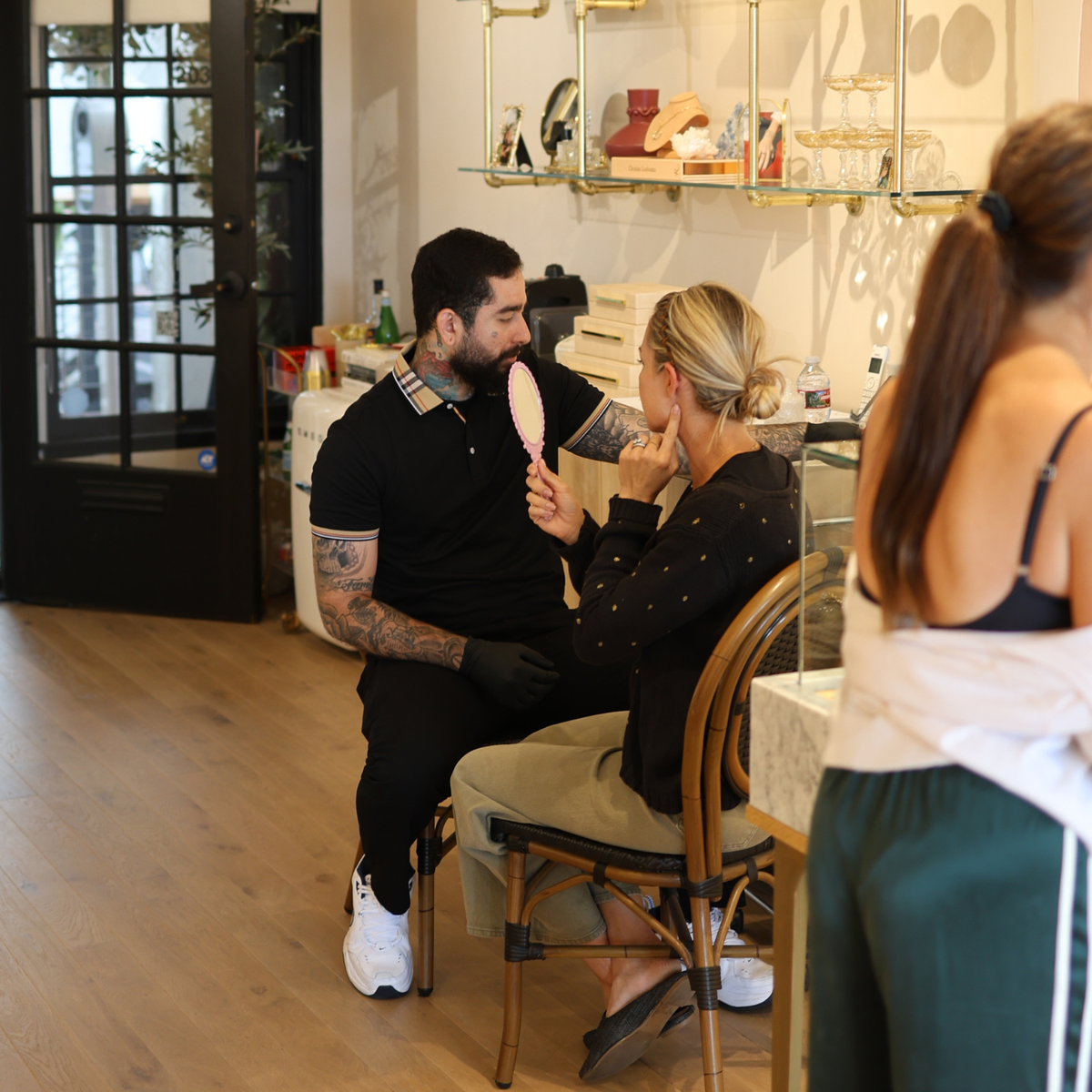
A good ear stack does not happen by accident. The best ones look effortless because someone thought through the placement, the scale, and how each piece talks to the one next to it before a single needle touched skin. This is the placement by placement breakdown we walk people through at every Mama Bijoux piercing party.

The placements we work with most at our piercing parties
Lobe
The lobe is the foundation of any stack. It heals the fastest, holds the widest range of styles, and is where most people start. A single lobe piercing can carry a statement piece on its own, but the lobe is also where a stack usually begins to build, a second or third hole gives you room to layer huggies, studs, and drop dangles without crowding a single placement. Huggies with a small drop, like our Georgian pear drop huggies, Georgian button back diamond huggies, or mini diamond pear drop huggies, give a lobe stack movement without taking up extra room. Once a second hole heals, our mini diamond dagger huggies in 14k yellow gold are an easy first piece for it.

Helix
The helix sits along the upper cartilage rim of the ear and is one of the most versatile placements for building out a stack. A single small stud reads quiet and refined, while a chain connecting two helix points, or a helix paired with a lobe piercing, adds movement without going maximal. This is usually the second placement people add once their lobes have healed.

Tragus
The tragus is the small flap of cartilage that sits just in front of the ear canal. It is a smaller placement, which makes it a natural home for a single dainty stud or a tiny drop dangle. Because it sits slightly forward of the rest of the ear, it tends to catch the light differently than lobe or helix pieces, a nice point of contrast in a fuller stack.
Conch
The conch is the larger, flatter section of cartilage toward the center of the ear. It has the most surface area of any cartilage placement, which means it can hold a slightly bigger piece, a small hoop or a statement stud, and still look proportional. A conch piece is often the one that anchors an entire stack, everything else is built to support it.

Building the Stack, Not Just the Piercings
Once you know your placements, the styling is what makes a stack feel curated instead of scattered. A few principles we come back to at every piercing party:
Lead with one statement piece. Whether it is a drop dangle at the lobe or a small hoop at the conch, pick one point of focus and let the rest of the stack support it. For color, our bezeled gemstone drop earrings come in green amethyst or lemon yellow quartz, and either one can carry the stack.
Vary the scale. Pairing a bigger piece with smaller studs reads more intentional than three earrings of the same size stacked in a row. A pear duo lab diamond stud is an easy smaller piece to set beside a bigger drop, and a pear shaped lab diamond stud can take the bigger role itself. Our mini trio curved diamond stud works well as the small piece: three graduated diamonds on a curve, sold as a single.
Keep the metal consistent. Mixing tones across a small area like the ear tends to compete with itself. Solid 14k yellow gold throughout keeps a stack looking cohesive.
Build in layers, not all at once. Add a placement, let it heal, and see how it sits with what you already have before deciding on the next one.


The best stacks are not built in one sitting. They are built over time, one placement at a time.
Ready to start or add to your stack? Check our events page for upcoming piercing parties at the atelier, or shop 14k gold studs made for layering any time.
See Upcoming Piercing Parties Shop Piercing Studs
Frequently Asked Questions
What order should I get my ear piercings in?
Most people start with the lobe since it heals fastest, then move up into cartilage placements like the helix, tragus, or conch over time. There is no rule that says you need every placement at once, a stack is something you build.
How many piercings make a full ear stack?
A full stack is usually three to five piercings across the lobe and cartilage, though some people prefer a minimal two point stack and others build out six or more. It comes down to how much ear you want to work with and how the jewelry sits together.
Can I mix different earring styles in one stack?
Yes, and it is usually what makes a stack look intentional rather than random. A common approach is one statement piece, like a huggie or drop dangle, paired with smaller studs or a chain that connects two placements.
Does Mama Bijoux use anything other than 14k gold for piercings?
No, every piece used at a Mama Bijoux piercing party or sold for fresh piercings is 14k solid yellow gold. Solid gold is the safest option for healing piercings since it will not flake, tarnish, or irritate the skin the way plated metals can.
How do I book a piercing at Mama Bijoux?
Mama Bijoux hosts piercing parties at the Costa Mesa atelier throughout the year. Check the events page for upcoming dates and RSVP details, or shop piercing studs any time for fresh or existing piercings.
Leave a comment
This site is protected by hCaptcha and the hCaptcha Privacy Policy and Terms of Service apply.