


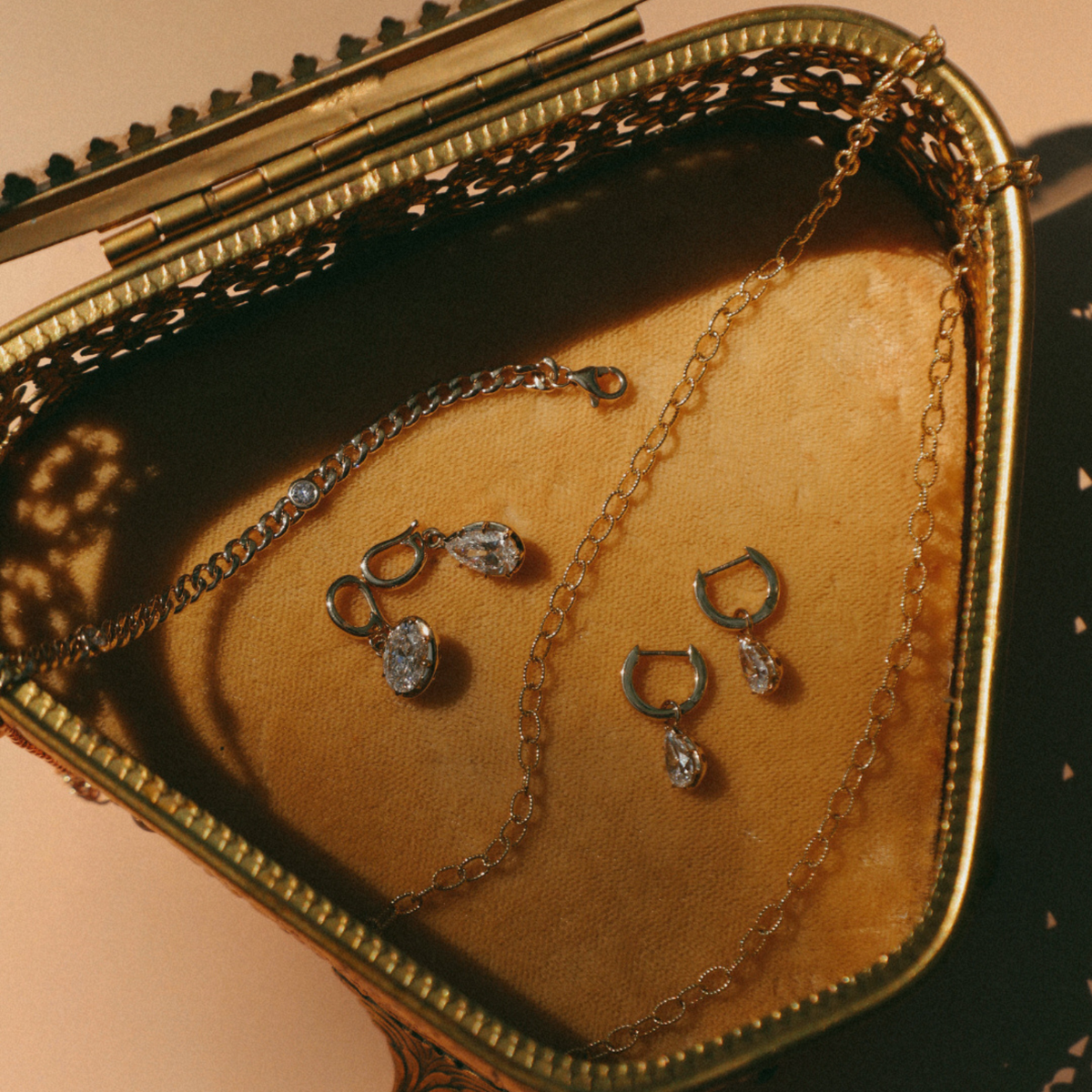
Why 14k Gold Is Mama Bijoux's Standard Metal
Katie on the metal she has built her family's craft around.
People ask me this more than almost anything else. Why 14k, when so much of fine jewelry moves between karats and metals depending on what a piece needs. The truth is I've never needed convincing. This is the gold I grew up around, and once you understand what the karat number actually measures, it stops sounding like a marketing choice and starts sounding like the obvious one.
What "14k" Actually Means
Karat measures how much of a piece is pure gold, out of 24 total parts. 24k gold is pure gold, no other metal mixed in. 14k gold is 14 parts pure gold and 10 parts other metals, alloyed in, which works out to roughly 58.3% pure gold by weight. 18k gold sits at 75% pure gold. 10k, the minimum most of the United States legally allows to be called "gold," is just under 42% pure.
Those alloy metals, typically copper, silver, or zinc in varying combinations, aren't filler. They're structural. Pure gold on its own is remarkably soft, soft enough that a ring made from it would scratch and warp under completely normal, everyday use. The alloy is what gives 14k gold the strength to hold a prong setting, keep a clasp closed, and survive being worn every single day for years.
Why Durability Beats The Karat Number
Here's the tradeoff nobody explains clearly enough: the higher the karat, the softer the gold. 24k has the richest, deepest color of any gold, and it's also the least practical metal you could choose for a ring or bracelet meant for daily life. 18k is a middle ground, a slightly deeper color than 14k with somewhat less durability. 14k gold gives up a small amount of that richness in exchange for meaningfully better resistance to scratching, bending, and general wear.
For jewelry that's meant to be worn constantly, not saved for occasions, that tradeoff isn't close. It matters most on the ring you never take off, which is why our guide to engagement ring trends in 2026 points couples toward 14k. I'd rather someone wear a 14k piece every day for twenty years than treat an 18k piece carefully because they're worried about it. Fine jewelry that has to be babied isn't doing its job.
Caring For 14k Gold Jewelry Every Day
Solid 14k gold does not tarnish the way gold-plated or gold-filled jewelry can, since there's no base metal underneath to eventually show through. What it does need is occasional cleaning. Wipe pieces with a soft polishing cloth when they start looking dull rather than bright, and avoid prolonged contact with chlorine, which can react with the alloy metals in gold over time and weaken a piece's structure, particularly at soldered joints and clasps.
I'd also recommend having any piece you wear daily checked by a jeweler about once a year, the same way you'd get a good pair of shoes resoled. A loose prong or a stretched clasp caught early is a small, inexpensive fix. Left alone, it's how a stone gets lost or a chain gets damaged beyond a simple repair.
What This Means When It's Passed Down
This is the part that matters most to me. An heirloom only works as an heirloom if it survives being worn. Every piece we make in 14k gold is built with the expectation that it will outlast a single owner, worn constantly for years and then handed down still looking like itself. When someone brings in a piece their grandmother wore for forty years and asks us to rework it into something new, it still holds its gold. That's not an accident. That's what 14k does when it's made well, and it's why 14k is the gold I reach for first.
Shop 14k Gold, Ready-Made Or Custom
Every piece across our Best Sellers is handcrafted in 14k gold at our Newport Beach atelier, ready to wear every day. If you're working from a specific vision, or reworking a family piece into something new, book a consultation here and we'll start that conversation together.
Frequently Asked Questions
Katie, Founder of Mama Bijoux
Leave a comment
This site is protected by hCaptcha and the hCaptcha Privacy Policy and Terms of Service apply.