


How To Layer Gold Necklaces (And Bracelets) With Everything You Already Own
No formula required. Just gold that's built to sit together.
A necklace that layers well isn't an accident of taste, it's an accident of construction. Chain gauge, link style, and clasp placement all determine whether two necklaces sit together cleanly at the collarbone or tangle by lunchtime. Understanding a little about how chains are actually built turns layering from trial and error into a matter of simple choice.
What Makes A Necklace Good For Layering?
Every chain has a link structure, and that structure is what decides how it behaves next to another chain. A box chain is made of small square links that sit flat and resist kinking, which makes it an ideal, forgettable base layer. A curb chain has flattened, interlocking links with more visual weight, better suited as a middle layer that adds texture without overwhelming a thinner piece next to it. A cable chain, the classic oval-link style, is versatile but can catch on similarly-sized cable chains if you layer two of the same weight together, so pairing different link types is usually the safer bet.
Clasp placement matters more than people expect too. A lobster clasp that sits slightly off-center, rather than dead center at the back of the neck, is less likely to catch on the clasp of a second necklace worn at the same time.
Chain Types And What They're Actually Good For
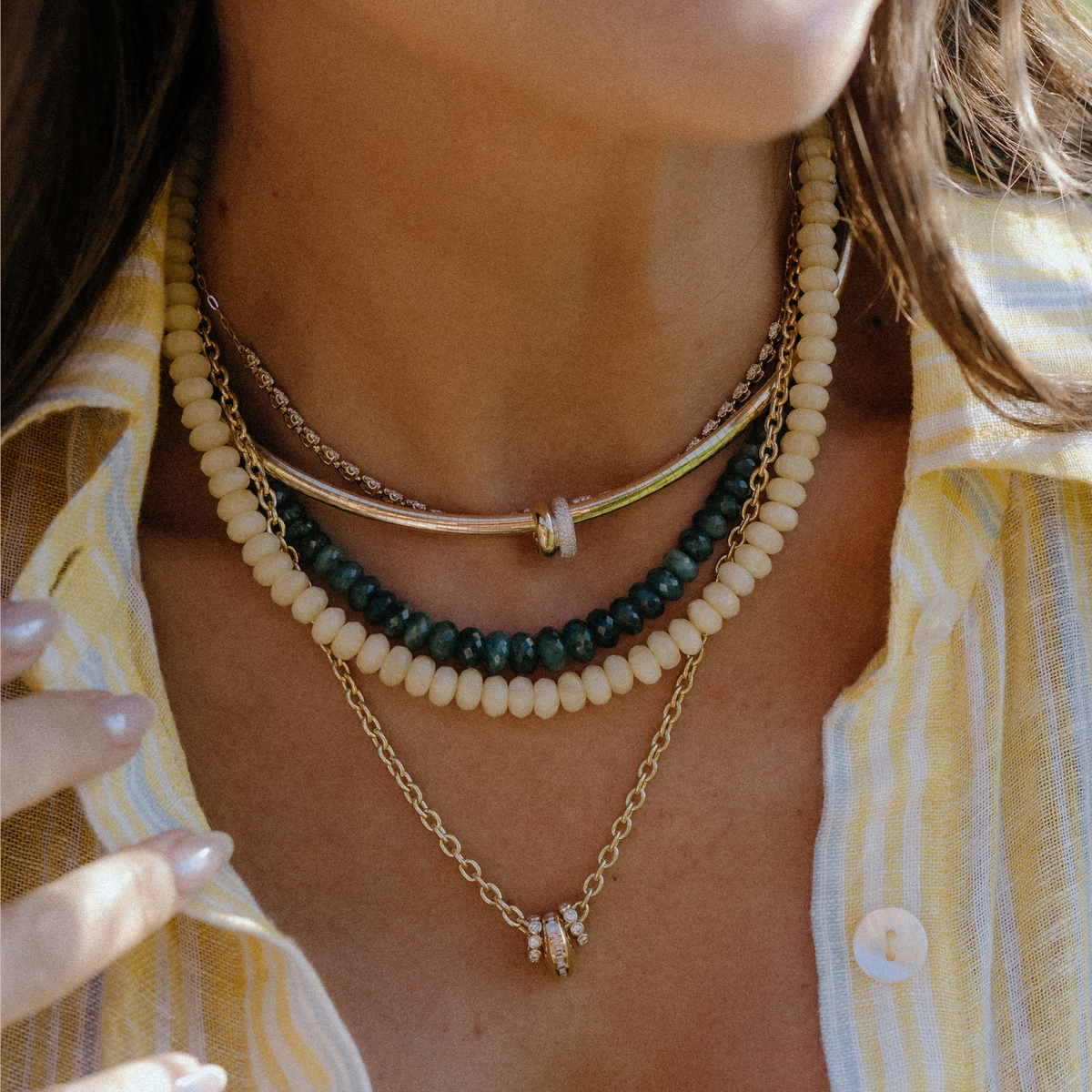
A Dainty Box Chain Necklace is the base layer most stacks are built around, thin enough to wear alone every day and sturdy enough to hold up under a second and third chain layered on top. The Celestial Graduated Diamond Layering Necklace adds sparkle without adding visual weight, which makes it a natural top layer that catches light without competing with anything underneath it. A bolder Mixed Round & Paperclip Chain Necklace works as the statement middle layer, the piece your eye goes to first, with the dainty chain and the diamond chain filling in around it. For a diamond layer with more presence, try the Mini Crown Set Diamond Tennis Necklace or the Cupcake Diamond & Chain Half Tennis Necklace.
A charm enhancer, which slides directly onto any chain you already own, is the easiest way to turn a plain chain into a focal point without buying a new necklace at all. Our Charms & Pendants collection is built around exactly that idea, birthstones, initials, and symbols meant to be added onto an existing chain one piece at a time. For one bigger piece, the Organic Bezel Set East/West Moval Diamond Pendant sets a 4.01 carat lab grown diamond sideways, on a bail large enough to move between the chains you already own.
Wearing A Layered Necklace Stack Every Day
Layered chains hold up well to daily wear in 14k gold, but a few habits keep them looking their best. Put necklaces on last, after perfume, lotion, and hairspray, since those products dull gold's shine faster than daily wear alone. Take chains off before sleeping to avoid tangling and unnecessary tension on the clasps overnight, and store each piece separately, laid flat or hung individually, rather than piled together in one dish where fine chains can knot.
If a stack does tangle, resist pulling directly on the clasp. Working the knot loose gently from the middle of the tangle protects the jump rings and clasp hardware from bending under pressure.
Building Your Stack: Chain Lengths And Focal Points
Length is what makes a layered look read as intentional. A 14 to 16 inch chain sits at the collarbone as your shortest layer. An 18 inch chain, the most common everyday length, falls just below it. A 20 to 22 inch chain sits at the bust for a third layer, and anything 24 inches or longer works as a single long piece or a dramatic bottom layer under the other two. Three necklaces at three different lengths, with one clear focal point like a charm enhancer or pendant, is the easiest formula for a layered stack that looks built on purpose rather than thrown on.
The same logic carries over to bracelets. Our Flexible Bangles collection was designed to stack, so start with one and keep adding as the mood strikes. Mixing in a chain bracelet, like an Oval Pavé Link Chain Bracelet, alongside a bangle stack adds texture without needing anything to match exactly.
Custom Or Ready-Made At Mama Bijoux?
Ready-made chains and charm enhancers from our Charms & Pendants collection cover most of what a first layered stack needs. If you want a specific chain length that falls between standard sizes, or a charm enhancer engraved with an initial or birthstone combination, that's a custom order handled directly with Katie Miller at the Costa Mesa atelier. Book a consultation here to start that conversation.
Leave a comment
This site is protected by hCaptcha and the hCaptcha Privacy Policy and Terms of Service apply.